- Our Most Popular Treatments
- Our Testimonials
- Start Your Smile Journey
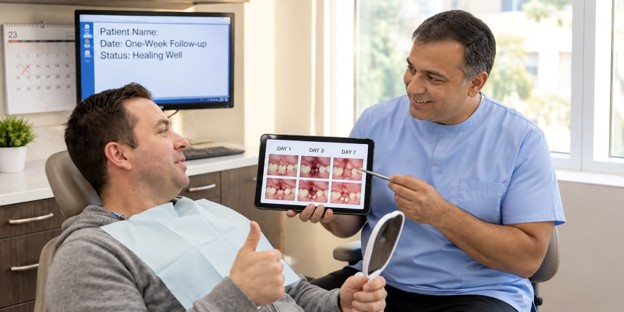
A bit of swelling after wisdom tooth removal is very common, especially during the first few days. It is part of the body’s normal response as the tissues around the extraction area begin to heal.
For some people, swelling is fairly mild, while others may notice more puffiness around the jaw or cheek. The amount can depend on the position of the tooth, how involved the procedure was and how your body responds afterwards.
Patients visiting Bandlish & Auplish will be given aftercare instructions based on their own treatment, so always follow the advice provided by your dental team.
Removing a wisdom tooth can involve the gum and tissues around the tooth, so temporary inflammation is expected afterwards.
Swelling often becomes more noticeable during the first two or three days before gradually easing. You might also experience some jaw stiffness or mild bruising around the area.
This does not necessarily mean anything is wrong, but it is worth keeping an eye on how your recovery is progressing.
Swelling after wisdom tooth removal varies depending on the complexity of the extraction and how your body responds to treatment. Although everyone’s recovery is different, there are some general patterns.
First 24 hours: Mild swelling may begin to develop around the cheek or jaw as the healing process starts.
Days 2–3: Swelling often becomes more noticeable and may reach its peak during this period.
Days 4–7: Swelling will usually begin to improve, although some tenderness, bruising or jaw stiffness may remain.
After the first week: Many patients notice a significant reduction in swelling, but recovery can take longer following more complex extractions.
If swelling continues to increase, becomes particularly painful or is accompanied by other concerning symptoms, contact your dental team for advice.
Your oral surgeon can explain what to expect based on your individual procedure.
There are a few practical steps that may help make the first few days more comfortable:
Try not to place ice directly on the skin. Wrapping a cold pack in a cloth can make it more comfortable to use.
A blood clot forms in the socket after the tooth has been removed and plays an important role in the healing process. The area should therefore be left as undisturbed as possible.
During the first 24 hours, avoid vigorous rinsing unless you have been told otherwise. After this period, your clinician may recommend gentle warm salt-water rinses.
You can continue brushing your other teeth, but take care when cleaning close to the extraction site. Smoking and vaping may also interfere with healing, so follow the advice given to you about when these should be avoided.
Swelling should gradually settle rather than continue getting worse. If it increases after several days, becomes severe or is accompanied by worsening pain, fever, persistent bleeding or difficulty swallowing, contact your dental team.
It is always better to ask if something does not feel right rather than trying to work it out on your own.
If your wisdom teeth need assessment or treatment, Dr Omesh Modgill provides specialist oral surgery care at the practice. As a Specialist Oral Surgeon in Harley Street, he can assess the position of the tooth, discuss treatment options and provide guidance for the recovery period.
Care at Bandlish & Auplish includes clear aftercare advice so you know what to expect once you leave the practice. Recovery can vary from one person to another, but giving yourself time to rest and following your post-treatment instructions can help the area heal as expected.






Fill in the form and our friendly team will be in touch with you monumentarily
I cannot recommend this clinic highly enough for anyone needing specialist dental care. I was diagnosed with a significant issue involving alveolar bone loss, particularly in my upper jaw, which requi... Read More
The practice is incredibly client focused from the moment you pick up the phone to the aftercare provided. Gita was fantastic and clear in explaining then resolving the issues I had. The results at th... Read More
I came to Dr. Gita Auplish after being turned away by an Invisalign provider who found gum disease during a routine clean and told me I’d need to see a specialist, then put me on a waiting list with... Read More
Like many people, I’ve had a longtime fear of the dentist but I’m very happy to leave a review here to let other people know you couldn’t be in better hands than with Gita. I was referred by my ... Read More
After a previous horrific incident at former dentist, I was extremely hesitant to attend another, I eventually found bandlish & auplish and now needed peridontal care it having been that long, I was b... Read More