- Our Most Popular Treatments
- Our Testimonials
- Start Your Smile Journey


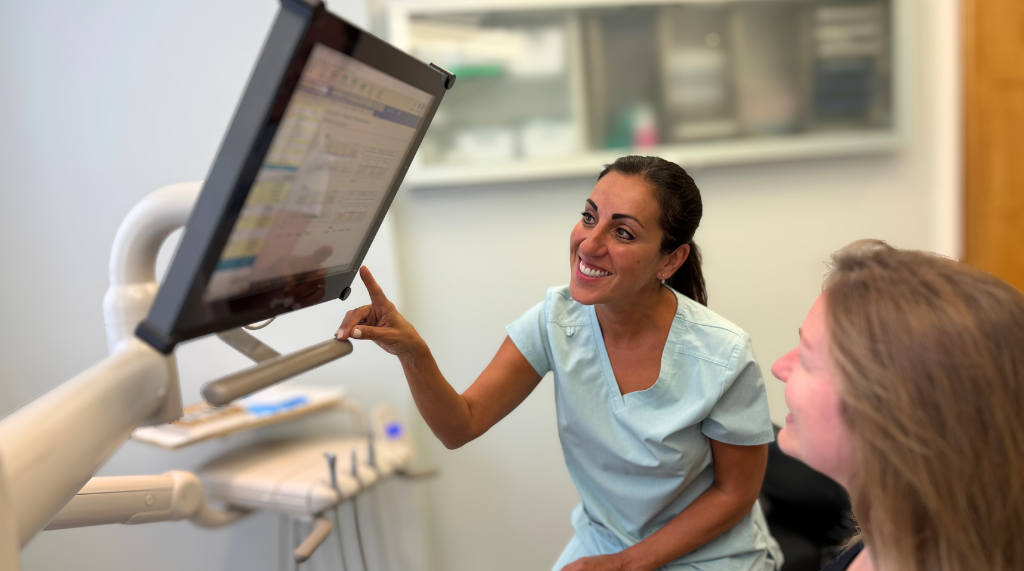
Gum disease (periodontal disease) is a chronic condition that affects the gums and bone supporting your teeth. Early signs include bleeding when brushing, bad breath, and receding gums. If left untreated, it can lead to tooth loss. Our specialist-led care identifies the problem early and stops it from progressing.
“Healthy gums do not bleed. If you’ve got bleeding, it’s a sign of infection — and that myth really needs to be busted.”
Dr Gita Auplish, Specialist Periodontist & Co-Founder, Bandlish & Auplish Dental Surgery.
For a full guide to the symptoms, visit our Gum Health Hub.

Every treatment plan starts with a specialist consultation and is tailored to the stage of your gum disease.
Every treatment plan is led by Dr Gita Auplish, our specialist periodontist. Most patients need non-surgical treatment only. Surgery is kept for advanced cases.
At your first visit we measure the gum around each tooth (gum charting), take X-rays where needed to check the bone, and go through anything that affects your gums, such as smoking or diabetes. You leave with a written treatment plan and a clear explanation of what’s involved.
Under local anaesthetic, we remove hardened plaque and bacteria from below the gumline and smooth the root surfaces so your gums can heal. This is usually done over one or more visits. Your gums may feel tender for a few days afterwards.
If deep pockets remain after cleaning, gum surgery lets us reach and clean the roots directly. We’ll talk you through the options and the recovery before anything is booked.
Gum disease can be controlled, but it needs ongoing care. Most patients return every three to four months for specialist cleaning and a check-up, which keeps the disease stable.


Dr Gita Auplish is registered with the General Dental Council as a specialist in periodontics (GDC No. 71011) and has been part of Bandlish & Auplish on Harley Street since 2004. She is known for gentle gum disease treatment, honest advice and precise technique, and for putting even the most nervous patients at ease.
“We are friendly, we are kind, we are experienced. You will have a pleasant experience, and you will get the outcome that you want and you deserve.”
Dr Gita Auplish, Specialist Periodontist & Co-Founder, Bandlish & Auplish Dental Surgery.
Gita also provides dental implant treatment, including for patients whose gums have been stabilised after gum disease. Meet the team.
Your general dentist and hygienist are essential for keeping your mouth healthy. But when gum disease is advanced, keeps coming back or is putting teeth at risk, a gum disease specialist in London can offer diagnosis and treatment that routine visits aren’t designed for.
You don’t need a referral to see a periodontist at our Harley Street practice. There are two ways to reach Dr Gita Auplish.
Book a consultation online or call us on 020 7436 9804. If you have recent dental X-rays, bring them along or ask your dentist to send them.
We contact your patient as soon as we receive the referral and keep you updated at every stage. You’ll receive a full diagnostic summary, treatment plan and report for your records, and once treatment is complete your patient returns to your care.
Your treatment is led by Dr Gita Auplish, who is on the GDC Specialist List in periodontics.
Two decades of treating advanced and complex gum disease at our practice, and over 30 years since Gita qualified.
Local anaesthetic and a calm, unhurried approach, especially for nervous patients.
We regularly receive referrals from general dentists for complex periodontal care.
Advanced technology and techniques for faster healing and better outcomes.
Access full care in one location, including hygiene therapy and implant maintenance.
Gum disease develops in stages, and the earlier we diagnose it at our Harley Street clinic, the more conservative your treatment can be. Knowing which stage you’re at helps Dr Gita Auplish recommend the right level of care.
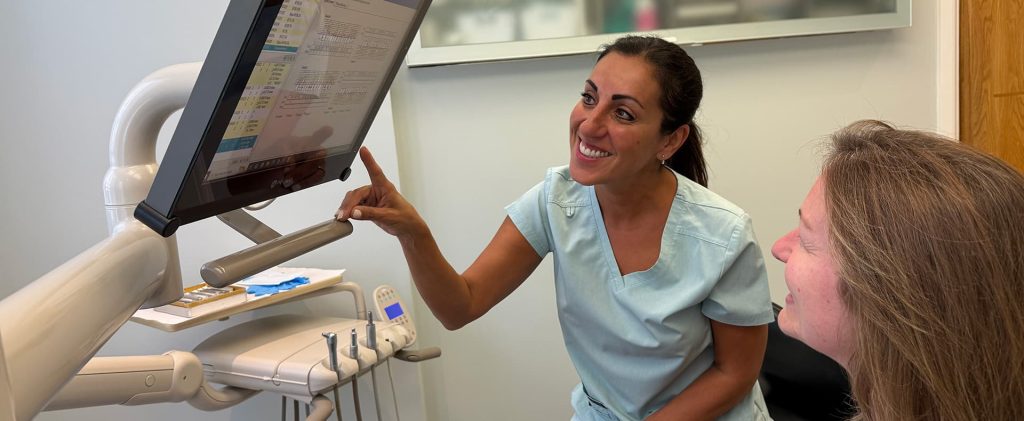
Periodontitis is the advanced stage of gum disease. The gums pull away from the teeth, the bone that holds them in place is gradually lost, and teeth can become loose. The damage can’t be undone, but treatment can stop it getting worse.
Treatment starts with a thorough deep clean, followed by a re-check to see how the gums have responded. Where needed, we move on to surgical treatment, then regular maintenance. Because periodontitis is a long-term condition, seeing a specialist early gives you the best chance of keeping your teeth.
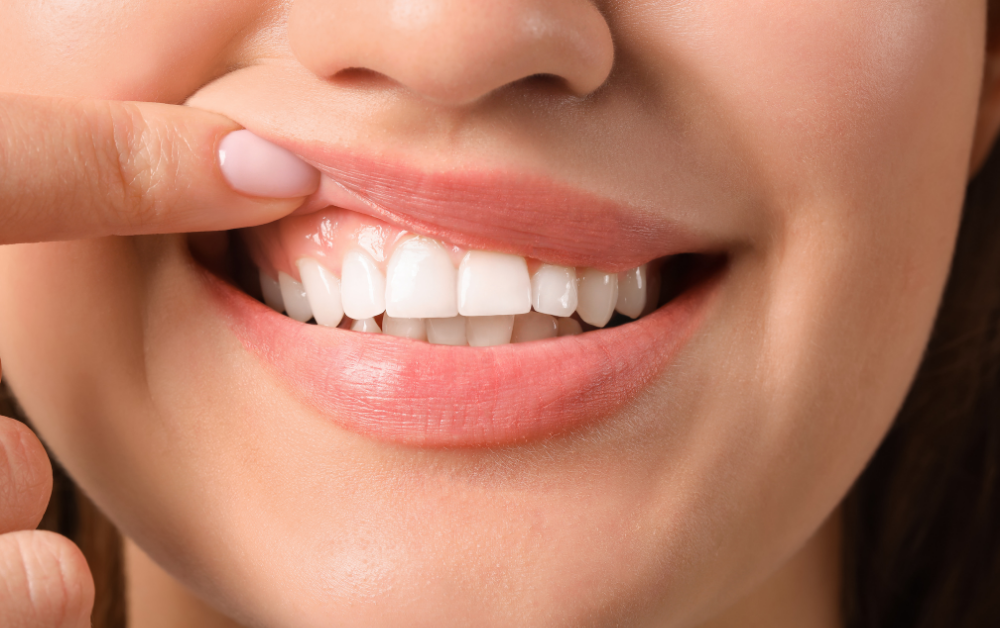
Receding gums expose the roots of your teeth, which can cause sensitivity and make teeth look longer. Gum disease is a common cause, but brushing too hard and a misaligned bite can also play a part.
We first treat the cause so the gums stop receding. Where the gum has already pulled back, options such as a gum graft can cover the exposed root. Read more about receding gums treatment.
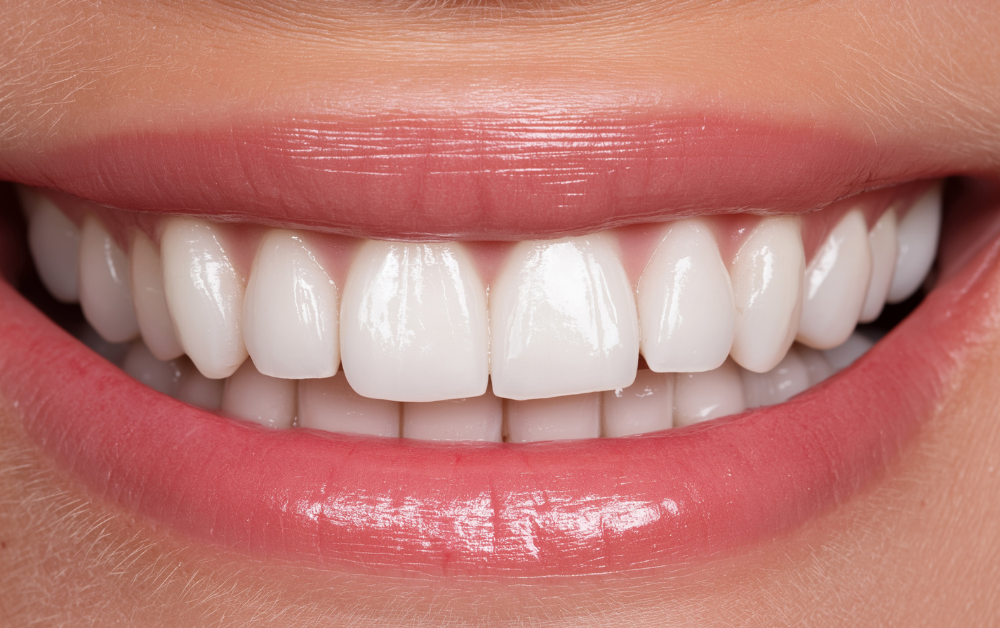
Scaling and root planing is the gold-standard non-surgical treatment for gum disease and the foundation of almost every periodontal plan at our Harley Street clinic. It’s a deep, careful clean of the tooth roots beneath the gum line, where ordinary brushing and routine hygiene visits cannot reach.
Under local anaesthetic, Dr Auplish removes the bacterial plaque, tartar and toxins that have built up inside the periodontal pockets, then smooths the root surfaces so the gums can re-attach. Most patients describe the experience as comfortable and far gentler than they expected. Scaling and root planing is highly effective at stabilising mild-to-moderate gum disease, and is the safest place to start for the majority of patients in London before any surgical option is considered.
Real Google reviews from patients treated for gum disease by Dr Gita Auplish on Harley Street.
I came to Dr. Gita Auplish after being turned away by an Invisalign provider who found gum disease during a routine clean and told me I’d need to see a specialist… From my first appointment, she gave me real hope instead of just a diagnosis. She was patient, thorough, and genuinely invested in getting my gum health back on track. After following her treatment plan, my results came back so much better than I expected.
Dr Gita fixed a decade’s worth of gum issues in two, pain-free sessions. She got to the root of the problems, and my gums no longer bleed when I brush or floss! Very happy with the work, and I found her straight-forward, honest and compassionate.
Excellent service. Having read a lot about chronic gum disease, I was very nervous. Dr Gita explained everything comprehensively and reassured that she can help. Explained clearly about the plan and how to work together. I would recommend Dr Gita to everyone with gum disease. Thank you so much.
I had periodontal treatment with Dr Gita which I cannot fault. My experience from start to finish was stress free and seamless. Everybody made me feel very welcome and assured, nothing was too much trouble. Dr Gita was very professional, she showed kindness and compassion and always had my best interests at heart. I cannot recommend this practice enough. An all round lovely experience.
Swipe for more reviews →
Deep cleaning is carried out under local anaesthetic, so most patients feel very little during treatment. Your gums may feel tender for a few days afterwards, and we’ll give you clear aftercare advice.
Gingivitis can be fully reversed. Once periodontitis has caused bone loss, the lost bone won’t fully grow back on its own, but the disease can be stabilised so you keep your teeth for the long term with regular maintenance.
Your first consultation takes around 45 to 60 minutes. Non-surgical treatment is usually carried out over one or two visits, followed by a review appointment. Any surgical treatment is planned separately. Afterwards, most patients have maintenance visits every three to four months.
Gum tissue doesn’t grow back by itself. Treating the cause stops it receding further, and in suitable cases a gum graft can cover exposed roots.
Periodontal disease is mainly caused by plaque bacteria building up around the teeth and gums. If plaque is not removed properly, it can harden into tartar and irritate the gum tissue. Other factors can increase the risk, including smoking, diabetes, certain medications, family history, stress, and irregular dental visits. At Bandlish & Auplish, gum health can be assessed during a periodontal consultation.
Periodontal disease can usually be managed, but advanced gum damage may not be fully reversed. Treatment aims to control infection, reduce inflammation, and prevent further breakdown of the gums and supporting bone. Ongoing maintenance is important because periodontal disease can return if plaque control is not kept up. Early care gives the gums a better chance of stabilising.
Gingivitis, the earliest stage of gum disease, can often be reversed with improved oral hygiene and professional cleaning. Periodontal disease that has affected the supporting bone cannot usually be fully reversed, but it can often be stabilised with treatment and regular maintenance. The aim is to stop further damage and help patients keep their gums as healthy as possible.
Common signs of periodontal disease include bleeding gums, swollen or tender gums, persistent bad breath, gum recession, loose teeth, discomfort when chewing, and changes in how the teeth meet. Some people may not notice symptoms at first, which is why routine gum checks are important. Bandlish & Auplish can assess the gums and advise whether periodontal treatment is needed.
Periodontal disease can affect adults of different ages, but it is more common as people get older. This is often due to longer exposure to plaque, medical conditions, medication use, smoking history, or previous gum problems. Age alone does not cause periodontal disease. At Bandlish & Auplish, patients can receive advice based on their gum health, risk factors, and dental history.
Research links untreated gum disease with conditions including type 2 diabetes and heart disease. Keeping your gums healthy is part of looking after your overall health.
Dentists usually refer patients when gum disease is advanced, isn’t responding to routine hygiene treatment, or when teeth or implants are at risk. A specialist periodontist has additional postgraduate training in diagnosing and treating these more complex cases.
Yes. Many implant patients have a history of gum disease. The key is to stabilise the gums fully before an implant is placed, because implants can develop their own form of gum disease (peri-implantitis) if the underlying condition isn’t controlled.
No. You don’t need a referral to be seen at our Harley Street practice. We welcome both dentist referrals and patients who book directly, so you can contact us yourself if you’re worried about bleeding gums, recession, loose teeth or a previous gum disease diagnosis.
Periodontal disease does not always lead to tooth loss. With early diagnosis, appropriate treatment, and regular maintenance, many people can keep their teeth for many years. Tooth loss becomes more likely when gum disease is left untreated or progresses to an advanced stage. Good daily cleaning and ongoing periodontal care both play an important role.
Not necessarily. Even with advanced periodontitis, many teeth can be saved when treatment is planned by a specialist periodontist, combining non-surgical treatment with minimally invasive surgery or bone regeneration where needed.
It depends on the stage of your gum disease and the treatment you need. Your consultation includes a full assessment, pocket charting, X-rays and a written diagnosis. Non-surgical treatment is then quoted per area of the mouth, and any surgery is costed separately. Full fees are on our Fees and Finance page, and 0% interest-free finance is available.
A hygienist cleans the teeth, helps prevent gum disease and supports your home care. A specialist periodontist is a dentist with several years of extra postgraduate training who is on the GDC Specialist List in periodontics. They diagnose and treat advanced gum disease, including surgical and regenerative treatment.
Don’t wait until it’s too late. Book your consultation with Dr Gita Auplish and get expert support to stop gum disease in its tracks. Whether you’ve been referred or are self-referring, we’re here to help you feel comfortable, confident and cared for every step of the way.
Flat 1 Harmont House
20 Harley Street
London
W1G 9PH